There’s a familiar tension in enterprise technology: buy a fully integrated platform or assemble a stack of best-of-breed components. The platform story is compelling: one vendor. One console. One contract. Everything bundled together.
The best-of-breed story is different. Best-of-breed optimizes each layer for performance, flexibility, and cost. Historically, platforms often won the narrative. But in periods of rapid change—like today’s AI era—modularity regains the advantage.
The platform gravity problem
Platforms can introduce operational gravity. When compute, storage, networking, analytics, governance, and AI tooling all live in one ecosystem, switching costs rise over time. What starts as convenience becomes constraint—and in AI, where tooling changes rapidly, that becomes expensive in both flexibility and economics. Industry leaders reflect this shift. CIOs are moving beyond a “cloud-first” mindset toward “cloud-smart” strategies and choosing the right environment for each workload instead of defaulting to one provider’s stack. This proactively avoids escalating costs and inflexible ecosystems. A recent CIO Dive trend report finds many IT leaders are gravitating toward purpose-built infrastructure optimized for specific workload demands—including AI—rather than broad commodity offerings.
Why modular infrastructure wins
AI pipelines evolve constantly: training datasets, checkpoints, GPU migrations, MLOps workflows and post-processing outputs are all subject to rapid changes to scale applications and extend model capabilities. Few organizations run all of that inside a single vendor environment or a single cloud ecosystem. Teams building differentiated systems optimize workflows and resources, not monoliths.
Modularity isn’t just about avoiding lock-in—it’s about real, measurable agility. Modular architectures allow organizations to adjust components independently as requirements change. CTOs are intentionally placing workloads where they perform best—cloud for global scale, on-prem or colocation for heavy AI training, and edge for low-latency inference—and treating each as part of a unified, purpose-driven infrastructure strategy.
This pattern holds true beyond just AI.
- In cyber resilience, what matters when a ransomware event hits isn’t whether you bought every tool from one vendor; it’s the speed and predictability of recovery (which specialized, resilient storage does more to accelerate than bundled dashboards)
- In cloud native application development, developers value predictable performance, clear pricing, and flexibility over being locked into a single ecosystem.
- In media and entertainment, workflows often span regions, partners, and technologies—moving petabytes of creative content, generating AI media assets, and orchestrating distributed rendering jobs. A modular approach enables teams from all sides of the business (creative and technical) to optimize for performance without constraint.
These use cases share common themes: avoid lock-in, preserve optionality, control costs, and maintain performance predictability. These align with broader industry sentiment that hybrid and composable architectures deliver greater agility and resilience in the face of evolving requirements.
Depth over breadth: A focused infrastructure philosophy
When vendors expand aggressively into adjacent domains—analytics, governance, AI tooling—they risk breadth at the expense of depth. In fast-moving markets, “jack-of-all-trades” platforms often become “master-of-none.” Best-of-breed doesn’t mean disjointed; it means each layer is optimized for its purpose and integrated intelligently.
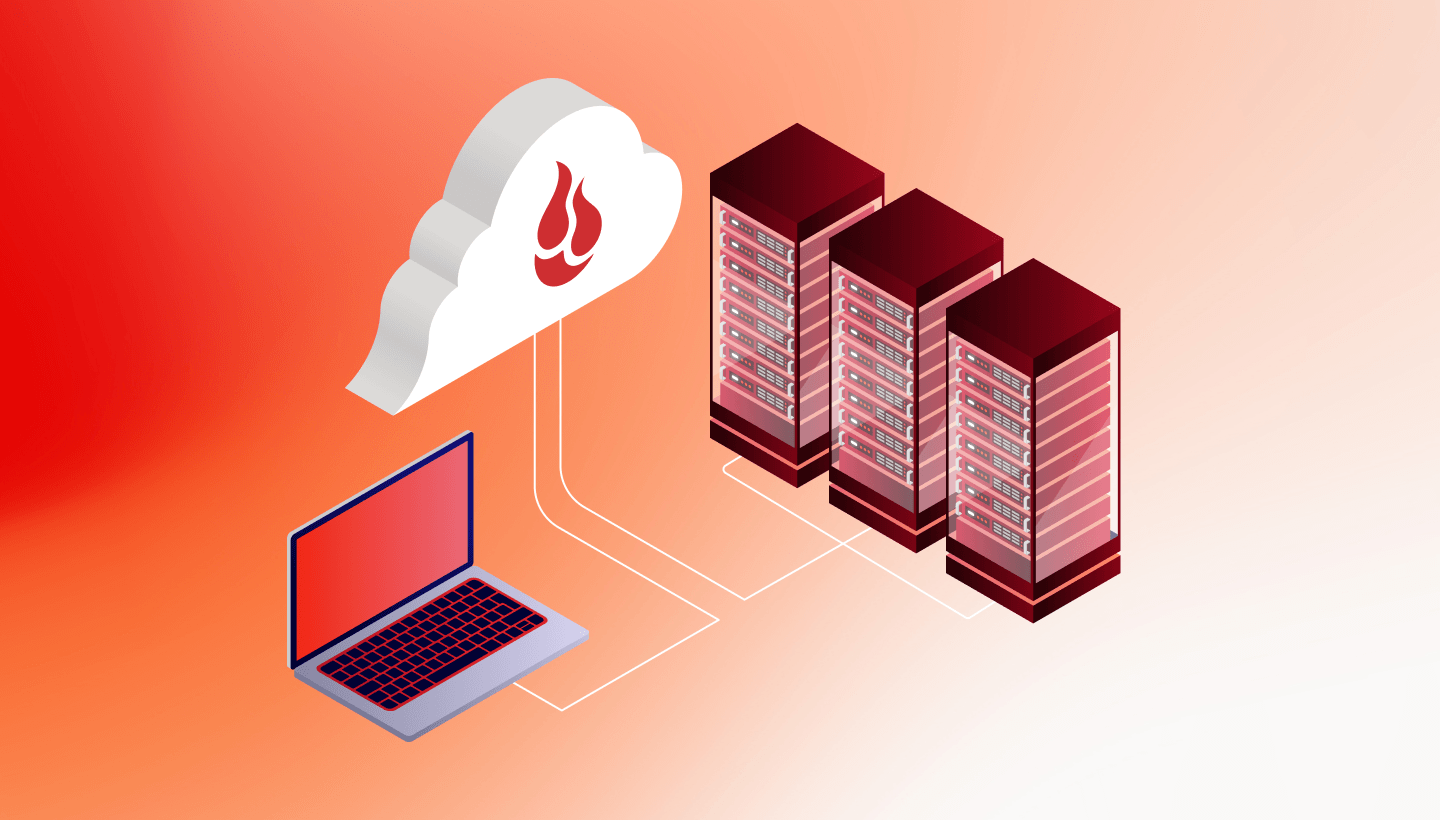
That’s the philosophy behind how we’ve evolved our own infrastructure. When Backblaze first launched our object storage service, we highlighted performance, transparency, and cost efficiency. As AI and high-throughput workloads accelerated, customers began using us as neutral infrastructure for staging, throughput, and data mobility between clouds. We leaned deeper into storage—high-throughput tiers, bandwidth guarantees, lifecycle tools—but intentionally stopped short of climbing higher up the application or analytics stack.
We draw a line at storage not because adjacent layers lack value, but because storage is foundational. AI differentiation, application logic, and workflow intelligence happen above the infrastructure layer. Customers need owned, interoperable workflows that can plug into any compute or AI platform without being co-opted by a monolithic ecosystem.
Modular infrastructure as a strategic backbone
Best-of-breed doesn’t mean fragmentation; it means focus with composability. The future of enterprise infrastructure isn’t about building the tallest platform—it’s about building the strongest foundation that supports innovation across many dimensions.
Across industries, infrastructure leaders are embracing workload placement strategies and hybrid models to optimize for cost, governance, and performance. In AI, this means hybrid cloud and on-prem strategies where appropriate; in traditional application and file storage, it means interoperable, resilient services; and in media workflows, it means performant pipelines unencumbered by monolithic stack limitations.
The companies that win in this era won’t be those who own every layer. They’ll be those who enable others to build faster, iterate often, and adapt without constraint.